
What to do if you suspect a food intolerance or allergy?
One of the questions I get asked most often as an allergy parent and as a therapist specialising in food allergies is “I think I have/my child might have a food allergy or intolerance, what should I do?”. Food allergies and intolerances is still a new thing to us, and they’re one of those things that we hear about, just briefly mentioned in antenatal classes and always feel like something unimaginable that might happen to us as adults or our children. And like most of our responses to uncertainty, they can initiate a wave of anxiety and panic. With our brains going into overdrive “What should I do? Should I stop giving them x? What will they be able to eat if they can’t have x? Where do I go? What will our life now look like?”. And then we start scanning for danger everywhere - becoming hypervigilant about everything, everywhere with everyone.
But here’s what I would have want to hear as an allergy parent at the start:
You are not alone and this is not your fault.
The Practical Stuff - What Can I Do?
Step 1: Write it down
When you make an appointment with your GP they will ask for specific examples and details as they assess and consider an onward referral to your local allergy team. Whether you make a note in your phone or write it on paper here’s what to make a note of:
What they ate - including ingredients where possible
The type of reaction - hives, runny poo, vomiting, etc
How quickly the reaction happened - immediate or delayed
The duration of the reaction
Step 2: Discuss with your GP about the next steps and ask as many questions as you need to. This might include continued monitoring, exclusion of the potential allergen(s), referral to the in-house dietitian, or an onward referral. It’s really important to follow GP guidance and if you have any questions, write them down and ask.
Navigating The Emotions - What I can do
It can be really scary facing a food allergy, intolerance or diagnosis. As humans, we love having certainty and control. It’s why we check the weather app each morning to know what to expect, or pop any questions into ChatGPT or Google when we’re not sure of something. It gives us that sense of knowing and offers a sense of reassurance. Tolerating uncertainty is really tough - it’s a real challenge to sit with. So here are 3 things you can do:
I can … Pause & breathe
I know we are breathing all day long as humans but when we get anxious our breathing changes and we take short, shallow breaths and even hold our breaths giving us that sensation of a tight chest. Steady, even breaths allow us to effectively regulate and slow down our breathing and tap into our parasympathetic nervous system. My go-to as a therapist is the finger (also called hand tracing) breathing technique because it’s simple, easy (for both adults and children), and is usually easily accessible as you use your fingers to guide your breathing.
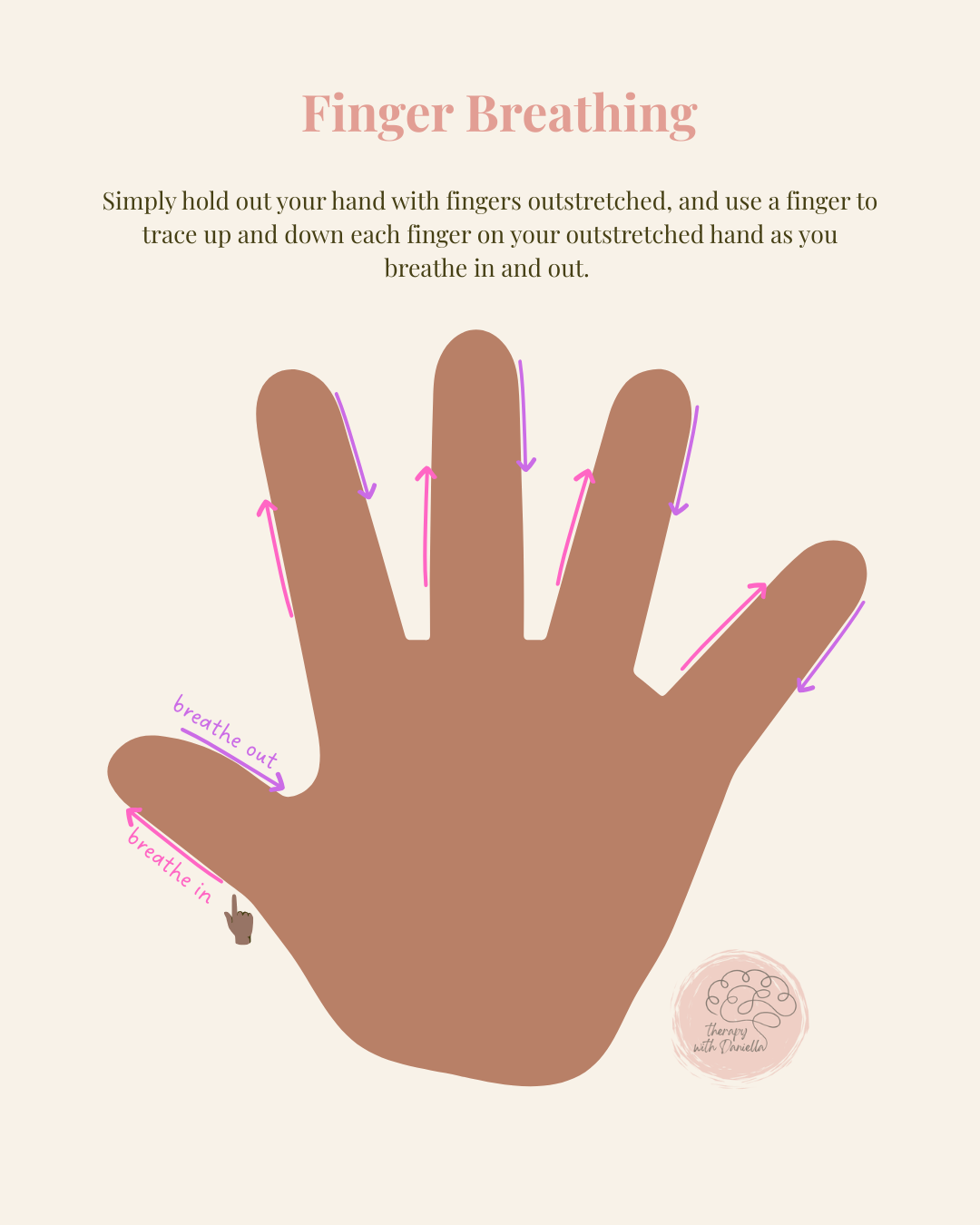
I can … Notice & name the feeling
When we’re worried about a potential food allergy or intolerance, we can experience a whole range of emotions - fear, guilt, overwhelm, grief for the life we thought we’d have, or even anger. These feelings are all completely valid and normal. Try acknowledging what you’re feeling rather than pushing it away: “I’m notice I am having the feeling of anxiety” or “I notice I am having the feeling of being overwhelmed by all this uncertainty.” Naming our emotions helps our brain process them more effectively, and adding the words “I notice I am having the feeling of” helps us to observe it as a temporary experience. If it’s your child who may have an allergy, remember that feeling worried doesn’t mean you’re failing them - it means you care deeply about their wellbeing. Be kind to yourself in the same way you’d be kind to a friend going through this.

I can … Connect with others who understand
When you’re facing a potential food allergy or intolerance, it’s easy to feel isolated - like you’re the only one navigating this uncertainty. But you’re not alone. Whether it’s reaching out to a trusted friend or family member to share how you’re feeling, or connecting with online support groups (Allergy UK has wonderful community forums), talking to others can help ease that sense of isolation. You don’t need to have all the answers or know exactly what’s happening yet - sometimes just saying “this is really hard and I feel scared” to someone who gets it can be incredibly powerful. Connection is one of our most effective emotional regulators, and you deserve support during this uncertain time.

Here are some trusted resources:
Allergy UK www.allergyuk.org
Natasha Allergy Research Foundation www.narf.org.uk
Anaphylaxis UK www.anaphylaxis.org.uk
The British Society for Allergy and Clinical Immunology (BSACI) www.bsaci.org
I hope you found something helpful in this piece. Sending you my very best as you navigate this journey.
Warmly,
Daniella

Daniella Doon-Joseph is BABCP accredited Cognitive Behaviour Therapist and an allergy mum herself. She specializes in maternal mental health and helping allergy parents to navigate the anxiety and overwhelm of living with food allergies.
If any of this feels familiar, you don't have to navigate it alone. Get in touch to book a free consultation.